
Low‑Budget Business Setup in Dubai – A Complete Guide
Starting a business in Dubai does not require a large upfront investment. With smart choices, you can run a low budget business setup in Dubai using affordable free‑zone licenses, virtual offices, and simple online‑only models. This guide explains how to register, structure, and operate a lean, compliant business with minimal capital—making your low budget business setup in Dubai both realistic and scalable.

Why Dubai suits a low budget business setup
Dubai is one of the most cost‑friendly places to start a business because:
-
Low‑cost free‑zone packages
-
Free zones like IFZA, Meydan, RAKEZ, UAQ, and SHAMS offer licenses starting around AED 6,000–15,000 per year, depending on the activity and package.
-
Many include license, virtual/flexi‑office, and basic documentation in one fee, which fits any low budget business setup in Dubai.
-
-
Fast online processes
-
Most licenses can be applied for online, reducing notary, typing, and consultancy costs.
-
Simple structures are often issued in days, not weeks, speeding up your low budget business setup.
-
-
100% foreign ownership in many sectors
-
Free zones allow full foreign ownership; many mainland professional and service activities now do too.
-
This keeps ownership and decision‑making simple and affordable for a low budget business setup.
-
-
Minimal overhead models possible
-
Freelancers, e‑commerce sellers, consultants, and digital agencies can run with almost no physical office, using virtual or flexi‑desks and working from home.
-
Because of this, a low budget business setup in Dubai is now realistic even with limited capital.
Affordable legal structures for a low budget business setup
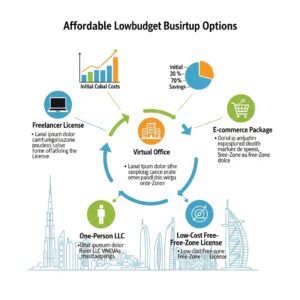
Not every company type is budget‑friendly in Dubai. For a low budget business setup in Dubai, the most practical structures are:
1. Freelancer or professional license
-
Ideal for consultants, freelancers, and solo professionals (digital marketing, IT, design, tutoring, writing).
-
Usually requires only a passport, sometimes a degree or CV, and a small fee.
-
Many free zones and authorities offer budget‑friendly freelancer/professional licenses that let you work legally for clients inside and outside the UAE—perfect for a low budget business setup.
2. One‑person free‑zone company
-
A single‑shareholder free‑zone LLC lets one owner hold 100% of the business.
-
Start‑up costs stay low because:
-
No high minimum capital is required.
-
You can use a virtual or flexi‑desk office instead of a full commercial space.
-
This model is ideal for a low budget business setup focused on services, e‑commerce, or trading.
3. Small‑scale e‑commerce or trading license
-
Free zones such as IFZA, Meydan, Dubai South, and RAKEZ offer e‑commerce, trading, and service licenses at low prices.
-
You can run an online store, dropshipping, or B2B trading business without heavy inventory or large staff, making it a strong option for a low budget business setup in Dubai.
Step‑by‑step low budget business setup in Dubai
You can launch a low budget business setup in Dubai in these steps:
1. Pick a low‑cost activity and structure
-
Choose something that needs little capital, such as:
-
Freelance services (marketing, design, writing, programming).
-
Online store or dropshipping (via Shopify, Amazon, or local marketplaces).
-
Consulting or agency (business, HR, finance, or digital‑marketing).
-
-
Decide on:
-
Freelancer/professional license (solo expert).
-
Single‑owner free‑zone company (for multi‑activity or e‑commerce).
-
This decision shapes your low budget business setup.
2. Choose a low‑cost free zone or freelancer‑friendly authority
Budget‑friendly options include:
-
IFZA (Dubai) – low‑cost packages for trading, services, and e‑commerce.
-
Meydan Free Zone (Dubai) – “Fawri” quick‑setup license, starting from around AED 12,500 for a zero‑visa package.
-
RAKEZ (Ras Al Khaimah) – very affordable for small‑scale trading and consulting.
-
UAQ Free Zone – low‑cost licenses ideal for freelancers and small businesses.
-
SHAMS (Sharjah Media City) – budget‑friendly for media, freelancers, and consulting.
These jurisdictions are the backbone of a low budget business setup in Dubai.
3. Prepare minimal documents
For a low budget business setup in Dubai, you usually need:
-
Clear passport copies of the owner.
-
Residence visa and Emirates ID (if you are already in the UAE).
-
Educational certificates or portfolio (for professional or freelance licenses).
-
A business‑activity description or 1‑page plan.
If you use a virtual or flexi‑office, you avoid full commercial leases, which keeps your low budget business setup even cheaper.
4. Register online and pay the lowest package
Most free zones let you:
-
Fill out an online application with your details, activity, and package.
-
Pay AED 6,000–15,000 (depending on zone and package) for license plus office.
-
Receive approval within a few days.
Because most of this is digital, your low budget business setup in Dubai avoids heavy legal or consultancy overhead.

5. Open a basic bank account
Once you have your trade license, you can open a corporate bank account:
-
Many UAE banks accept free‑zone licenses with simple documentation.
-
You mainly need the license, passport, and a short business‑plan summary.
-
Some banks offer digital onboarding, which saves time and travel costs.
A low‑cost, easy bank account is a key part of a low budget business setup in Dubai.
How to keep overhead low in your low budget business setup
Even after registration, you must control recurring costs to keep your low budget business setup in Dubai healthy:
-
Use virtual or flexi‑desk office
-
Avoid full‑size commercial leases; virtual or flexi‑desk packages satisfy license requirements without heavy rent.
-
-
Work from home or co‑working spaces
-
For freelancers and small agencies, working from home or using shared co‑working spots reduces fixed‑cost pressure.
-
-
Use free or low‑cost tools
-
Canva, Google Workspace, WhatsApp, Zoom, Instagram, TikTok, and Shopify let you handle design, communication, and marketing cheaply.
-
-
Start with a simple package and upgrade later
-
Begin with a basic license + virtual office + no or few visas.
-
Add visas, a bigger office, or more activities only when revenue supports it.
-
This approach turns your low budget business setup in Dubai into a lean, scalable model.
Low‑budget business ideas that fit this model
To match your low budget business setup in Dubai, consider:
-
Freelance digital services (content writing, graphic design, video editing, social‑media management).
-
Online store or dropshipping (niche products sold via Shopify or marketplaces).
-
Consulting or coaching (business, life, study, or fitness coaching, often delivered online).
-
Home‑based food or cloud‑kitchen model (special‑diet or niche‑cuisine food delivered via delivery partners).
-
Small‑scale trading or sourcing (importing popular items on a small scale and reselling online or via WhatsApp).
All of these can be launched under a low budget business setup in Dubai because they require low capital, minimal staff, and flexible office setups.
Why a low budget business setup must still be compliant
Even with a low budget business setup, you must stay compliant:
-
Use the right license type (e‑commerce, freelance, professional, or trading) for your activity.
-
Renew the license on time each year to avoid fines.
-
Keep clear records of income and expenses for tax and banking requirements.
A low budget business setup in Dubai that is compliant will look more professional to banks, clients, and partners—helping you grow without costly penalties.
Summary of low budget business setup in Dubai
A low budget business setup in Dubai is possible today thanks to affordable free‑zone packages, online registration, and 100% foreign ownership in many sectors. By choosing a low‑cost free zone or freelancer‑friendly authority, using virtual or flexi‑office solutions, and starting with a simple activity (freelancing, e‑commerce, or consulting), you can register a legal business in Dubai for a few thousand dirhams, not tens of thousands. The key is to keep overhead low, grow revenue first, and only scale up your structure when your business can support larger costs.