🌐 Digital Creator Economy & Brand Collaboration Foundations
The rise of the digital world has completely reshaped how brands connect with audiences, and today Influencer Marketing has become a core part of modern promotion strategies. In the early stage of online branding, companies relied heavily on paid advertisements, but now they are shifting toward authentic creator-based promotion. This shift is driven by trust, relatability, and engagement. Businesses are increasingly focusing on social media reach growth strategy to expand visibility without depending only on traditional ads. In this environment, Influencer Marketing works as a bridge between brands and real audiences by using creators who already have established trust with their followers. Companies now prioritize collaboration with creators instead of one-way advertising, making communication more human and interactive.
Another important element in this ecosystem is brand awareness digital expansion services, which help businesses build recognition through influencer collaborations. These services allow small and large brands to enter competitive markets without massive advertising budgets. Alongside this, engagement bloosting creator campaigns are also becoming essential, as engagement determines how strongly audiences interact with content. The stronger the engagement, the higher the conversion potential. Modern businesses also track reach as a primary performance indicator because it shows how far content spreads across platforms.
In addition, Influencer Marketing is now deeply connected with content authenticity. Audiences prefer real experiences over scripted ads, which makes influencer-driven storytelling more effective. Brands also invest in audience trust building techniques, ensuring that collaborations feel natural and not forced. As digital platforms continue evolving, companies are integrating influencer strategies into long-term marketing systems instead of short-term campaigns. This transformation highlights how Influencer Marketing is no longer optional but essential for survival in competitive digital industries.
📱 Content Strategy, Audience Targeting & Platform Growth
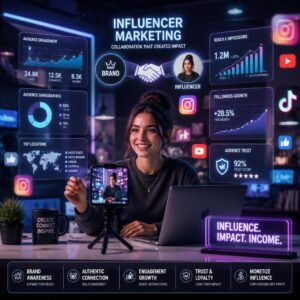
The second stage of digital promotion focuses heavily on strategy, planning, and audience targeting where Influencer Marketing plays a central role. Brands today do not randomly select influencers; instead, they use micro influencer targeting solutions to find creators who match their niche audience. This approach ensures better communication and higher engagement rates. In modern marketing systems, Influencer Marketing is also used to design platform-specific campaigns for Instagram, TikTok, and YouTube, ensuring that content aligns with user behavior on each platform.
One of the strongest techniques used today is audience engagement optimization strategy, which focuses on improving how users interact with content. This includes likes, shares, comments, and saves. At the same time, content performance tracking models are used to analyze which type of posts generate the highest response. These systems allow brands to refine their strategy continuously. Another widely used approach is conversion-focused influencer planning, which ensures that campaigns are not just for visibility but also for measurable results.
Within this structure, Influencer Marketing becomes a powerful tool for personalized communication. Instead of generic ads, influencers create relatable content that fits naturally into user feeds. Brands also rely on creator collaboration framework systems that help manage partnerships efficiently. These frameworks ensure consistency, transparency, and performance tracking across all campaigns.
Additionally, reach remains a critical metric because it determines how many users see the content. When combined with engagement boosting creator campaigns, reach becomes even more valuable as it converts visibility into interaction. In today’s competitive environment, Influencer Marketing helps brands maintain relevance by staying connected with fast-changing digital trends and audience expectations.
📊 Analytics, Performance Measurement & Data Optimization
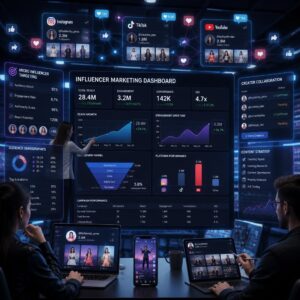
In the third phase of digital growth, businesses rely heavily on analytics where Influencer Marketing becomes measurable and data-driven. Companies now use data driven campaign optimization systems to track influencer performance in real time. These systems analyze impressions, engagement rates, and conversion behavior. In this context, Influencer Marketing is no longer guesswork but a structured, performance-based strategy.
One of the most important metrics used is conversion tracking analysis tools, which help businesses understand how influencer campaigns directly lead to sales or actions. Marketers also rely on performance insight reporting dashboards to evaluate which influencers deliver the highest return on investment. These dashboards allow brands to make better decisions about future collaborations. Another key concept is ROI improvement marketing strategy, which ensures that every campaign generates measurable business value.
In addition, Influencer Marketing benefits from advanced segmentation techniques, allowing brands to divide audiences based on behavior, interests, and demographics. This ensures that campaigns are more precise and effective. Businesses also use campaign efficiency tracking models to reduce wasted spending and improve targeting accuracy.
The importance of conversion cannot be ignored in this phase, as it reflects real business success. Higher conversion rates indicate stronger audience trust and better campaign execution. Along with this, reach helps determine how many potential customers are exposed to the message. When combined, reach and conversion create a complete performance picture.
Overall, Influencer Marketing becomes a scientific process when supported by analytics, helping businesses scale effectively in competitive digital markets.
🤝 Brand Trust Building & Long-Term Creator Relationships
The fourth stage of digital evolution focuses on trust and long-term partnerships where Influencer Marketing plays a crucial role in shaping brand reputation. Instead of one-time promotions, businesses now prefer long-term influencer partnership models that create consistent messaging and stronger audience relationships. In this system, Influencer Marketing helps brands build emotional connections with users through repeated exposure and authentic storytelling.
Another key strategy is authentic content collaboration approach, where influencers are given creative freedom to present products in their own style. This increases trust and makes promotions feel natural. Alongside this, brand loyalty enhancement systems are used to maintain customer retention over time. These systems focus on turning first-time buyers into repeat customers.
Modern brands also rely on trust-based audience engagement strategies, which ensure that communication remains transparent and honest. Influencers who maintain authenticity generate higher engagement rates and stronger community connections. Additionally, relationship-driven marketing models are becoming popular because they prioritize human connection over aggressive selling.
In this stage, Influencer Marketing becomes more than promotion—it becomes storytelling. Brands co-create content with influencers to build deeper emotional value. This helps improve both awareness and credibility in competitive markets. The repeated use of Influencer Marketing strategies ensures that businesses remain relevant and trusted in the eyes of consumers.
At the same time, reach continues to play a role in expanding visibility, while conversion ensures that trust leads to measurable business results. Together, they form a balanced marketing system that supports sustainable growth.
🚀 Future Trends, AI Integration & Digital Expansion
The final stage of modern marketing focuses on innovation, automation, and future growth where Influencer Marketing is evolving rapidly through technology. Artificial intelligence is now being used in AI influencer selection systems, which help brands find the most suitable creators based on audience behavior and engagement data. In this advanced environment, Influencer Marketing is becoming more precise, automated, and scalable than ever before.
Another emerging trend is predictive marketing performance analysis, which allows businesses to forecast campaign results before launching them. This reduces risk and improves decision-making. Along with this, automated campaign management tools are helping brands handle multiple influencer collaborations efficiently.
The integration of Influencer Marketing with AI is also improving personalization. Brands can now deliver highly targeted content to specific audience segments. This leads to better engagement and higher conversion rates. Another important innovation is real-time engagement monitoring systems, which track audience reactions instantly and allow quick adjustments.
In addition, reach expansion technologies are helping brands distribute content more widely across platforms. When combined with influencer strategies, this creates massive visibility opportunities. Businesses are also investing in digital ecosystem growth strategies, which integrate influencers, content creators, and automated systems into one unified marketing structure.
Ultimately, the future of digital branding depends heavily on Influencer Marketing, as it combines creativity with data intelligence. With rising competition, brands that adopt AI-driven influencer systems will achieve stronger visibility, higher engagement, and better conversions in the long run.