
Wifi Locker UAE: Custom Wireless Locker Technology in the UAE
A wifi locker is an internet‑connected storage unit that uses Wi‑Fi to receive commands, unlock compartments, and log every access event in the cloud or on a central server. Instead of relying on mechanical keys or static PIN codes, wifi lockers can be opened via mobile apps, QR codes, biometrics, or RFID badges, making them ideal for contactless, data‑driven workflows.
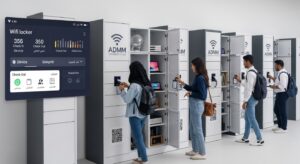
In the UAE’s fast‑growing cities—Dubai, Abu Dhabi, Sharjah, and beyond—wifi lockers are becoming essential tools for offices, schools, logistics hubs, malls, and apartment complexes.
At The ADMM, we design Custom Wireless Locker Technology UAE that fits the unique culture, climate, and business practices of the Emirates, from desert‑grade durability to Arabic/English multilingual screens.
How Custom Wireless Locker Technology Works in the UAE
Custom wireless locker technology isn’t a one‑size‑fits‑all product. It’s an ecosystem tailored to your space, user journey, and security policies.
Core Components of a Wifi Locker System
A typical The ADMM wifi locker deployment includes:
-
Wi‑Fi‑enabled smart lock modules that can also fall back to BLE or offline codes if the network drops.
-
Battery‑powered compartments with low‑power consumption and optional solar support for outdoor installations.
-
Central cloud or on‑premise dashboard that shows real‑time locker status, access logs, availability, and alerts
-
Mobile and web portals for admins and end users, with role‑based permissions and multi‑language support.
-
Open APIs so wifi lockers can connect to ERP, HR, CRM, fleet‑tracking, and academic portals.
This architecture lets The ADMM deploy custom wifi locker banks that look and behave differently for each sector:
-
Corporate offices with badge‑based staff lockers.
-
Universities with tablet‑and‑laptop device‑check systems.
-
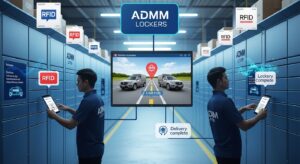
Logistics centers with parcel‑delivery banks linked to courier software.
Why Wifi Locker Systems Outperform Traditional Lockers
For UAE organizations, moving from keyed or PIN‑based lockers to wifi locker systems brings tangible improvements in security, efficiency, and user experience.
1. Stronger Security and Auditability
Traditional lockers are vulnerable to:

-
Lost keys and shared access.
-
Mechanical break‑ins.
-
No clear record of who opened a locker or when.
Wifi lockers solve this by:
-
Logging every unlock attempt with a user ID, timestamp, and device.
-
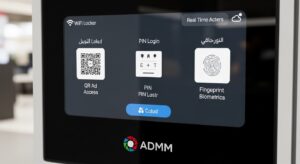
Supporting multi‑factor access methods (PIN + app, biometrics, RFID).
-
Sending real‑time alerts if a locker is opened unauthorized, jammed, or left open too long.
This level of traceability is critical for sectors like banking, healthcare, and logistics, which must meet UAE cybersecurity and data‑protection regulations.
2. Faster Deployment and Lower Costs
Installing wired locker systems often requires:
-
Running power and data cables across floors.
-
Retrofitting walls, doors, and access points.
-
Long downtimes that disrupt operations.
With wireless / wifi locker systems, The ADMM can often deploy and configure locker banks in a matter of days, without extensive cabling.
Benefits:
-
Reduced cabling work lowers both labor and material costs.
-
Modular cabinets allow you to start small and add compartments later.
-
Battery‑based lockers simplify placement in open spaces like malls, gyms, or parking lots.
Many organizations report significant capital and operational savings compared with traditional locker setups.
3. Smarter User Experience
Employees, students, delivery drivers, and mall visitors expect frictionless experiences. Wifi lockers deliver that with features such as:
-
App‑based access – users open their locker with a smartphone, without carrying keys.
-
QR or NFC entry – fast check‑in at gyms, schools, or parcel hubs.
-
Reservation and queuing – users can reserve a locker in advance, and the system notifies them when it’s ready.
In corporate environments, wifi lockers integrate with shift‑scheduling tools, so lockers unlock only during a user’s approved hours, which improves hybrid‑work and contactless culture.
Wifi Locker Solutions in Education: Smart Storage for Schools and Universities
Across the UAE, schools and higher‑education institutes are adopting wifi locker technology to better manage shared devices, lockers, and student belongings.
How Wifi Lockers Help Educational Institutions
Modern campuses often rely on:
-
Laptop and tablet fleets for students.
-
Shared lab instruments and specialized equipment.
-
Personal storage for books, sports gear, or uniforms.
Without smart storage, these assets are at risk of loss, misplacement, and time‑consuming manual tracking. Wifi lockers address this by:
-
Tracking every device from check‑out to return, with timestamps.
-
Automating distribution – a student scans a QR code and the correct locker opens.
-
Reducing IT workload by generating clear logs for repairs, returns, or lost devices.
Many smart locker providers for schools highlight digital audit trails, which let administrators see who last checked out a device, when, and on which assignment.
At The ADMM, we integrate wifi lockers into broader academic portal systems, so lockers become part of the student lifecycle—from enrollment and device allocation to usage reports and equipment returns.
Wifi Lockers in Logistics, E‑commerce, and Retail
Beyond education, wifi locker systems are transforming deliveries, last‑mile distribution, and self‑service in the UAE.
Parcel and Delivery Lockers in Malls and Residential Buildings
E‑commerce companies face several delivery challenges:
-
Failed attempts when customers aren’t home.
-
Packages left unattended outside doors.
-
Theft or misplacement at manned reception desks.
Wifi lockers solve this by:
-
Allowing customers to choose a secure pickup point (mall, office building, or residential hub).
-
Sending a time‑limited code that unlocks the correct compartment once the courier arrives.
-
Providing confirmation and tracking for both the merchant and the buyer.
In Dubai Mall‑style environments, wifi lockers reduce congestion at service counters and support “click‑and‑collect” promotions, improving customer satisfaction and reducing operational friction.
Logistics Hubs and Warehouse Applications
In logistics and warehousing, wifi lockers can be used for:
-
Parcel holding for customs, quarantine, or cross‑carrier handoffs.
-
Driver lockers for tools, ID badges, and safety gear at depots.
-
Return‑and‑exchange hubs where items are temporarily stored and then released when approval is confirmed.
When integrated with fleet tracking and GPS systems, wifi lockers can trigger alerts such as “vehicle has arrived at locker hub; lockers ready for access,” helping to streamline operations.
For corporate offices and co‑working spaces, wifi lockers provide:
-
Secure personal storage for staff belongings.
-
Shared equipment lockers for presentation tools, cameras, and demo units.
-
Keyless access that aligns with modern, hybrid‑work cultures.
How The ADMM’s Custom Wifi Locker Technology Is Built
The ADMM structures Custom Wireless Locker Technology UAE around three core pillars: connectivity, security, and integration.
1. Connectivity and Network Architecture
-
Each locker uses Wi‑Fi and BLE to communicate with a central hub and cloud platform.
-
In weak‑signal areas, we deploy edge gateways that store data locally and sync once the connection is restored.
-
Offline mode ensures that even during network outages, lockers can still open using pre‑prepared codes or tokens, with logs synced back when connectivity resumes.
This balance between cloud‑based control and local resilience makes wifi lockers suitable for:
-
Air‑conditioned office towers and malls.
-
Open‑air logistics yards and outdoor pickup points.
2. Security and Regulatory Compliance
UAE businesses must comply with data‑protection and cybersecurity standards such as Federal Decree‑Law No. 45 of 2021 and Dubai cybersecurity frameworks.
The ADMM’s wifi locker systems address these requirements with:
-
End‑to‑end encryption for locker‑to‑gateway and gateway‑to‑cloud communications.
-
Role‑based access control (RBAC) so only authorized personnel can manage locker banks.
-
Auditable logs that record every access attempt, success, and failure, with timestamps and user context.
For banks, healthcare centers, and government‑linked offices, these features are essential for audits and risk‑management policies.
3. Integration with Enterprise Systems
Wifi lockers at The ADMM never operate in isolation. They can connect to:
-
HR systems to release staff lockers only during active employment or specific shifts.
-
ERP and CRM platforms for releasing promo items, demo products, or samples.
-
Fleet‑tracking and GPS solutions for logistics‑driven locker workflows.
-
Academic portals so locker usage becomes part of the student or staff profile.
We expose REST/GraphQL APIs so developers can build custom dashboards, mobile apps, or workflow rules without disrupting existing software. This approach is ideal for:
-
Web developers using React, Vue, or HTML/CSS/JS.
-
App developers building React Native or Flutter solutions for branded locker apps.
Typical Use Cases of Wifi Lockers Across the UAE
Depending on your industry, wifi lockers can be customized very differently. Here are some common scenarios The ADMM supports.
1. Corporate Offices and Factories
-
Employee locker rooms with keyless, shift‑based access.
-
Device lockers for shared laptops, tablets, or presentation tools.
-
Visitor lockers with single‑use codes issued at reception or via QR.
2. Schools, Universities, and Training Centers
-
Student device lockers for laptops, tablets, and lab tools.
-
Staff lockers that sync with ID badges and timetables.
-
Sports‑gear and equipment cabinets with automated checkout.
3. Malls, Gyms, and Leisure Facilities
-
Parcel lockers for e‑commerce deliveries and returns.
-
Gym lockers reservable via a mobile app for peak‑time flexibility.
4. Logistics, Warehouses, and Supply Chains
-
Secure parcel hubs that release compartments only when couriers arrive.
-
Temporary quarantine or customs lockers that unlock after system‑based approval.
Planning Your Wifi Locker Deployment
If you are considering wifi locker systems for your UAE organization, here’s a practical roadmap:
-
Define your use case – Are you storing parcels, employee belongings, student devices, or shared tools?
-
Estimate capacity – How many users do you expect per hour, and what size compartments do you need?
-
Choose access methods – app, QR code, PIN, biometric, RFID; or a combination.
-
Decide on integration level – standalone, or full tie‑in with ERP, CRM, HR, or academic portals.
The ADMM can support you with:
-
On‑site surveys and 3D mock‑ups of locker layouts.
-
Phased deployment to minimize disruption.
-
Training and documentation for admins, staff, and end users.
Why Choose The ADMM for Wifi Locker Solutions in the UAE?
The ADMM stands out in the Custom Wireless Locker Technology UAE space because:
-
We have deep experience in UAE markets, from Dubai free zones to Abu Dhabi industrial parks.
-
Our cloud‑based locker platforms support apps, web dashboards, and API‑driven workflows.
-
We prioritize local compliance, Arabic‑ready interfaces, and desert‑wise hardware design.
Whether you need a single locker cabinet for a small startup or a network of 500+ compartments across several locations, The ADMM can tailor a wifi locker system that scales with your business and supports both today’s workflows and future digital‑transformation plans.