
Why Dubai Is the Best Place to Launch Your Business: A Modern Dubai Business Setup Story
Dubai has become one of the world’s most attractive destinations for entrepreneurs and investors, thanks to its modern infrastructure, tax‑advantaged environment, and pro‑business regulations. For many newcomers, the process of Dubai Business Setup can sound complex, but with the right guidance and the right partner, it becomes a smooth, efficient journey. The ADMM, a leading digital‑focused business‑setup and advisory firm, has distilled this experience into a practical, beginner‑friendly roadmap that works whether you are a Pakistan‑based professional, a global freelancer, or a serious UAE‑bound investor.
The Big Picture: Why Dubai Business Setup Makes Sense in 2026

Over the past decade, Dubai has positioned itself as a global business hub, combining strategic location, world‑class logistics, and a stable regulatory framework. The UAE offers mainland and free‑zone structures, many of which allow 100% foreign ownership, zero personal income tax, and full repatriation of profits—conditions that are rare in most developed economies.
For entrepreneurs from countries like Pakistan, this means:
Access to GCC and international markets.
A transparent, English‑friendly legal and licensing system.
Simple company‑registration procedures and relatively low setup costs, especially when using digital‑first services like The ADMM.
The ADMM focuses on making this opportunity accessible to everyone, from solo founders to small‑business owners, by offering low‑budget and fully online Dubai Business Setup packages.
Three Main Ways You Can Do Dubai Business Setup: Mainland, Free Zone & Offshore
Before diving into paperwork, it helps to know which structure suits your idea. In Dubai you typically choose between:
Mainland Company (LLC or Sole Proprietorship)
Operate freely across the UAE without customs barriers.
Usually require a local Emirati partner (for some LLCs) unless you opt for a professional services license that allows 100% foreign ownership.
Free‑Zone Company
100% foreign ownership in many zones.
No customs duties on imported and exported goods.
Often lower setup and office‑rental costs, especially for trading, consulting, and e‑commerce businesses.
Offshore or Special‑Jurisdiction Entities (like ADGM)
International‑style, English‑law‑based regimes used mainly for funds, financial services, and holding companies.
The ADMM typically recommends free‑zone or low‑budget mainland setups for beginners, because they are faster, less capital‑intensive, and fully digital, making the Dubai Business Setup process much smoother
Build Your Business Idea on a Solid Legal Foundation
The first real step is clarity: what will your business do and how will it be structured?
Choose your activity: Trading, consultancy, e‑commerce, IT services, digital marketing, training, etc. Many free zones allow broad categories (for example, “general trading” or “professional consulting”), which give you flexibility to expand later.
Decide ownership: If you are a foreigner, 100% ownership in a free zone is usually the simplest route; some professional mainland licenses also allow full foreign control.
Pick the entity type: For most small businesses, a Free‑Zone Limited Liability Company (FZ‑LLC) is ideal. It protects your personal assets, is easy to open bank accounts for, and works well with digital models.
At The ADMM, advisors help you match your idea to the right activity code and license type, so your Dubai Business Setup runs without unnecessary re‑applications or delays.
Choosing the Right Free Zone for Your Dubai Business Setup
Dubai offers more than 30 free‑zone and mainland options, each with its own pricing, office rules, and target sectors. The ADMM’s digital‑focused approach usually steers clients toward.
DUQE Free Zone – known for 100% foreign ownership, zero personal income tax, and full profit repatriation; ideal for trading, consulting, and online‑based services.
Meydan Free Zone – popular for fast digital setup, flexible packages, and premium business addresses inside Dubai.
IFZA Free Zone – cost‑effective formations with low‑budget packages that suit small startups and freelancers.
For a low‑budget Dubai Business Setup, The ADMM often recommends virtual‑office or flex‑office packages instead of a full physical office, which slashes rent and maintenance costs while keeping your license valid.
Give Your Dubai Business Setup the Right Identity with a Strong Company Name
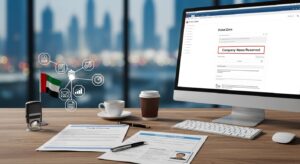
Next, you choose a legally compliant company name and get it reserved. Dubai’s free‑zone and DED portals allow you to:
Check name availability online.
Propose 2–3 names (in Arabic and English) in priority order.
Ensure your name does not infringe on trademarks or contain restricted words (such as “Dubai,” “UAE,” or “bank” unless you have a license to use them).
The ADMM simplifies this by:
Pre‑screening your name ideas.
Handling the online reservation through the chosen free‑zone portal.
Ensuring your approved name clearly reflects your business so it works well for branding and marketing later.
This step is a key stage in any Dubai Business Setup, as an approved name becomes the legal identity of your company.
Getting Your Paperwork Right in the Dubai Business Setup Process

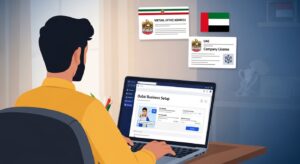
Once the name is approved, you prepare the founding documents. These usually include:
Memorandum and Articles of Association – defining shareholding, capital, and management structure.
Shareholder and director details – passport copies, Emirates IDs (if applicable), and proof of address.
Initial approval and lease agreement (or virtual‑office agreement) showing your business address.
In many free‑zone setups, The ADMM:
Prepares clean, standardized documents.
Guides you on notarization or attestation if required.
Submits the application digitally, reducing delays and printing or courier costs.
For ADGM‑style financial entities, the process is more compliance‑heavy, including anti‑money laundering (AML) policies and appointment of a Money Laundering Reporting Officer (MLRO), but even there, digital filing through the ADGM Registration Authority speeds up the Dubai Business Setup timeline.
Pay and Get Your License – The Turning Point of Dubai Business Setup
After document approval, you pay:
Government fees (DED or free‑zone registration).
Licensing fees (activity‑based).
Office or virtual‑office fees (if your package includes a physical or flex desk).
In a typical low‑budget Dubai Business Setup, The ADMM talks about packages starting from roughly AED 6,000–15,000, all‑inclusive, depending on the zone and package type. This usually covers license, basic office/virtual office, and some administrative support.
Once payment clears, you receive:
Certificate of Incorporation.
Trade License (either free‑zone or mainland).
Free‑zone card or equivalent emirate‑specific ID documents for your company.
From this stage your business is legally allowed to operate in Dubai and open a corporate bank account, which is a major milestone in every Dubai Business Setup journey.
Opening a Corporate Bank Account After Dubai Business Setup
Opening a bank account is usually the most time‑sensitive step, because banks ask for:
Company registration and license.
Proof of office (lease or virtual‑office agreement).
Director and shareholder KYC documents (passport, address proof, sometimes CV).
Business plan or transaction forecasts, especially for new, low‑turnover entities.
The ADMM supports clients by:
Preparing clean, professional KYC packs.
Recommending banks that accept digital signatures or remote onboarding.
Helping structure your account for e‑commerce or B2B payments, including multi‑currency options where available.
Many UAE banks now offer online onboarding and digital‑onboarding routes, which fits perfectly with The ADMM’s low‑budget, digital‑first philosophy and makes the Dubai Business Setup process faster and more convenient.
Visas and Permits – Making Your Dubai Business Setup Human‑Ready
Once licensed, you can sponsor visas for yourself and key staff. The ADMM often guides beginners through:
Employment visas (for managers, employees, or founders using a “salary” visa).
Investor or partner visas (for owners who hold a significant share and want long‑term residency).
Golden Visa options, if income or investment thresholds allow, for extended 5–10 year residency.
Typical steps include:
Medical fitness test and Emirates ID registration.
Entry permit, then residence visa stamping.
Labor‑contract registration with the Ministry of Human Resources and Emiratisation (MOHRE).
The ADMM’s role is to coordinate this with PRO services or government portals, so you avoid long queues and last‑minute surprises, which directly improves the overall Dubai Business Setup experience.
Running Your Business Digitally – The Heart of Modern Dubai Business Setup
For a low‑budget, essential Dubai Business Setup, The ADMM emphasizes digital operations:
Remote‑team model: Founders and employees can work from home or co‑working spaces, using cloud tools (accounting, CRM, logistics).
Virtual office: Many free‑zone licenses allow a virtual business address, which is usually enough for receiving correspondence and maintaining the legal seat.
You can then:
Use e‑commerce platforms and payment gateways to sell regionally.
Invoice clients globally via UAE‑based bank accounts.
Outsource back‑office tasks (accounting, payroll, compliance) to affordable service providers.
This model keeps your fixed costs low while still giving you a UAE‑based, internationally respected legal entity and makes scaling your Dubai Business Setup easier as you grow.
Staying Compliant and Growing Your Dubai Business Setup
Even after setup, there are ongoing obligations:
Renewal of trade license (usually annually).
Maintaining office or virtual‑office agreement
Tax compliance – though personal income tax is nil in the UAE, corporate tax (if applicable) and VAT registration must be handled properly.
The ADMM usually offers compliance‑light packages that include:
Annual renewal reminders.
Assistance with UAE corporate‑tax and VAT filings if needed.
Audit and bookkeeping support for more established businesses.
Over time, many founders use their Dubai entity to:
Access GCC markets more easily.
Attract international clients under a UAE‑registered brand.
Eventually expand into physical offices or manufacturing, as revenues grow.
Long‑term success in any Dubai Business Setup depends on clean compliance and smart planning, not just the initial registration.