
Why Every Business Needs a POS System
This is why understanding Why Every Business Needs a POS System has become so important for modern organisations. A POS System is no longer just a tool for processing payments; it has evolved into a complete business management solution that connects sales, inventory, staff, and customer data in one place.
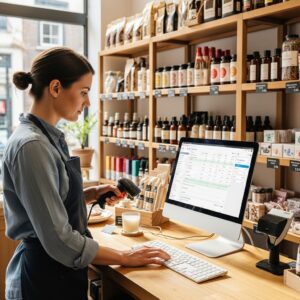
Whether a business is a small retail shop, a growing restaurant, or a large enterprise, relying on manual processes limits growth and increases the risk of costly errors. By adopting a POS System, companies gain control, visibility, and accuracy across their daily operations, which directly impacts profitability and customer satisfaction.
As markets become more competitive, speed and accuracy play a critical role in success. Customers expect fast service, transparent pricing, and multiple payment options, and a POS System helps businesses meet these expectations consistently. From generating instant receipts to applying correct taxes and discounts automatically, the system removes guesswork from transactions. Business owners also benefit from real-time reporting, which allows them to track sales performance, identify best-selling products, and understand customer behaviour.
These insights make it easier to adjust strategies, manage costs, and improve service quality. Without digital tools, gaining this level of clarity would require significant time and effort, making growth slower and less predictable without a POS System supporting the process.
Another major reason Why Every Business Needs a POS System is its ability to support scalability and long-term planning. As a company grows, operations naturally become more complex. More products, more employees, and sometimes multiple locations require better coordination and stronger operational control.
A modern POS System adapts easily to growth, allowing businesses to expand without losing efficiency or accuracy. Inventory updates automatically, staff activity becomes more transparent, and financial records remain organised even as transaction volumes increase.
In addition to operational efficiency, security and transparency are essential in today’s business environment. A POS System provides secure payment handling, accurate transaction histories, and reliable data storage, helping businesses protect both revenue and customer trust.
This level of control is especially important as digital payments become more common and regulatory requirements increase. By implementing a POS System, businesses position themselves for long-term success, clearly demonstrating Why Every Business Needs a POS System in a competitive, digital-first marketplace.
In the modern digital economy, businesses are expected to operate faster, smarter, and more efficiently than ever before. Customer expectations have evolved, competition has intensified, and technology has become the backbone of successful operations. In this environment, a POS System is no longer a luxury—it is a necessity for businesses of all sizes.
From small retail stores to large restaurant chains and service providers, businesses that adopt digital tools gain a significant advantage over those relying on manual processes. A POS System plays a central role in daily business operations.
It does far more than process payments. It connects sales, inventory, staff, customers, and reporting into a single streamlined platform. Businesses that fail to modernise their transaction and management processes often face inefficiencies, errors, and lost revenue opportunities. This is why companies across industries are rapidly transitioning toward smarter point-of-sale solutions.
Understanding What a POS System Really Is
Many business owners still think of a point-of-sale solution as a simple cash register. In reality, a modern POS System is a comprehensive business management tool. It records every
Whether it is a desktop-based setup or a cloud-powered online solution, the goal remains the same: to simplify operations and improve accuracy. Modern systems integrate seamlessly with payment gateways, digital wallets, accounting software, and customer relationship tools. This level of integration allows business owners to maintain full control over operations without juggling multiple disconnected systems.
The Role of POS Technology in Business Efficiency
Efficiency is one of the biggest challenges businesses face today. Manual billing, handwritten invoices, and disconnected spreadsheets slow down operations and increase the risk of mistakes. A POS System automates these tasks, allowing staff to focus on serving customers instead of managing paperwork.
With automated pricing, tax calculations, and instant receipt generation, transactions become faster and more reliable. This efficiency directly impacts customer satisfaction, as shorter wait times and accurate billing create a smoother purchasing experience. Over time, these small improvements add up, resulting in stronger customer loyalty and repeat business.
Why Accuracy Matters in Daily Transactions
Even small pricing errors can cause significant financial losses when repeated across hundreds of transactions. Manual systems are prone to human error, especially during busy hours. A POS System eliminates this risk by applying predefined pricing rules, discounts, and tax rates automatically.
Accuracy is particularly important for businesses handling large volumes of transactions, such as retail stores, restaurants, supermarkets, and hotels. Consistent and error-free billing protects profit margins and builds customer trust. Customers are far more likely to return to a business where they feel confident in the fairness and transparency of pricing.
Inventory Control as a Growth Driver
Poor inventory management is one of the most common reasons businesses lose money. Overstocking ties up capital, while understocking leads to missed sales opportunities. A smart POS System provides real-time inventory tracking, ensuring that stock levels are always accurate.
Each sale automatically updates inventory records, helping business owners identify fast-moving products, slow sellers, and seasonal trends. This insight allows for smarter purchasing decisions and better supplier negotiations. Businesses can also set low-stock alerts, ensuring that popular items are reordered before they run out.
Data-Driven Decisions Through Real-Time Reporting
Successful businesses rely on data, not guesswork. A modern POS System generates detailed reports covering sales performance, profit margins, peak business hours, and customer behaviour. These insights help business owners understand what is working and what needs improvement.
With access to real-time analytics, businesses can optimise pricing strategies, adjust staffing levels, and plan targeted promotions. Cloud-based systems offer the added advantage of remote access, allowing owners and managers to monitor performance even when they are not physically present at the business location.
Improving Customer Experience Through Technology
Customer experience is a key differentiator in competitive markets. A POS System helps businesses deliver faster service, accurate billing, and multiple payment options. Many systems also store customer purchase history, making it possible to offer personalised recommendations and loyalty rewards.
For restaurants and hospitality businesses, integrated systems support table management, order tracking, and split billing. For retail stores, features like barcode scanning and digital receipts enhance convenience. These improvements create a more professional and enjoyable experience for customers.
Secure Payments and Financial Transparency
Security is a major concern for both businesses and customers. A reliable POS System ensures secure payment processing through encrypted transactions and compliance with financial regulations. Supporting multiple payment methods—including cards, digital wallets, and online payments—also makes businesses more accessible to a wider audience.
Digital transaction records improve financial transparency and simplify accounting processes. Instead of reconciling cash manually, businesses can rely on automated reports that align with accounting and tax requirements.
Supporting Small Businesses and Startups
Many startups hesitate to invest in technology, assuming it is only for large enterprises. In reality, a POS System is especially valuable for small businesses. It provides structure, organisation, and scalability from the very beginning.
By implementing a reliable system early on, startups avoid operational chaos as they grow. They gain access to insights that help refine business models, understand customer preferences, and manage cash flow more effectively.
Preparing Businesses for Long-Term Growth
Growth brings complexity. More products, more customers, more staff, and sometimes more locations. A flexible POS System is designed to scale alongside the business. Whether opening a new branch, adding online sales, or expanding product lines, the system adapts without disrupting operations.
This scalability makes modern POS solutions a long-term investment rather than a temporary fix. Businesses that plan for growth are better positioned to compete in evolving markets.
Transitioning from Manual to Digital Operations
Businesses that still rely on manual systems often face resistance to change. However, the transition to a POS System is usually smoother than expected. Modern solutions are user-friendly, require minimal training, and offer ongoing technical support.
Once implemented, the benefits become immediately visible. Faster operations, better reporting, improved customer satisfaction, and reduced stress for staff all contribute to a healthier business environment.
Why Every Business Needs a POS System
As businesses continue to evolve, technology plays a critical role in shaping efficiency, customer satisfaction, and long-term growth. In this second part, we explore how a POS System delivers industry-specific advantages, improves return on investment, and helps businesses avoid common operational mistakes that limit scalability and profitability.

POS Technology in Retail Businesses
Retail businesses operate in highly competitive environments where speed, accuracy, and inventory visibility directly impact revenue. A POS System allows retailers to manage pricing, promotions, stock levels, and customer purchases from a single platform. Barcode scanning, automated discounts, and real-time stock updates reduce checkout time and minimise errors during peak hours.
Retailers also benefit from detailed sales analytics that highlight best-selling products, seasonal trends, and underperforming items. These insights support smarter purchasing decisions and reduce losses caused by dead stock. For multi-branch retail operations, centralised dashboards provide visibility across all locations, ensuring consistency and control.
Restaurant and Café Operations Made Smarter
Restaurants and cafés deal with fast-paced environments where order accuracy and speed are essential. A POS System streamlines order management by connecting front-of-house and kitchen operations. Orders placed at the counter, table, or online are transmitted instantly, reducing miscommunication and improving service efficiency.
Features such as menu customisation, split billing, and real-time table tracking help staff manage busy service hours smoothly. Additionally, sales data allows restaurant owners to identify popular menu items, optimise pricing, and manage ingredient inventory more effectively, leading to higher margins and reduced food waste.
Hotel and Hospitality Management Benefits
The hospitality industry relies heavily on seamless guest experiences. In hotels, a POS System integrates with front desk operations, room service, restaurants, and billing systems. Guests enjoy faster check-ins, accurate billing, and flexible payment options, while management gains real-time insights into occupancy, revenue streams, and guest behaviour.
Such integration improves coordination between departments and enhances service quality. Hotels can also analyse guest preferences to offer personalised services, boosting satisfaction and repeat bookings.
Service-Based Businesses and Professional Firms
Service providers such as salons, clinics, repair services, and consultancies also benefit greatly from digital transaction systems. A POS System enables appointment-based billing, service tracking, and customer history management. This helps businesses maintain accurate records while offering personalised service recommendations.
For recurring clients, stored data improves efficiency and strengthens relationships. Automated invoicing and payment tracking also simplify financial management, freeing up time for business owners to focus on service quality and expansion.
Financial Control and Long-Term Cost Savings
One of the most overlooked advantages of adopting modern technology is long-term cost efficiency. The return on investment from a POS System becomes evident through reduced errors, improved inventory turnover, faster service, and better use of staff resources. Businesses save money by minimising losses caused by inaccurate billing, theft, or poor stock management.
Cloud-based platforms further reduce infrastructure and maintenance costs. Automated reports also reduce reliance on manual accounting, lowering administrative expenses while improving financial transparency.
Avoiding Common Business Mistakes
Many businesses struggle not because of poor products or services, but due to operational inefficiencies. Choosing the right POS System helps avoid common mistakes such as poor inventory visibility, inconsistent pricing, and a lack of performance insights. Businesses that delay adopting digital tools often find themselves overwhelmed as they grow.
Another common mistake is selecting systems that lack scalability. A flexible solution ensures that expansion—whether through new branches, online sales, or additional services—does not require starting from scratch.

Security, Compliance, and Trust
In an era of increasing digital transactions, security and compliance are critical. A reliable POS System supports encrypted payments, audit trails, and compliance with tax and financial regulations. This protects both the business and its customers from fraud and data breaches.
Accurate digital records also simplify audits and reporting, ensuring transparency and reducing legal risks. Customers are more likely to trust businesses that offer secure and professional payment experiences.
Supporting Business Expansion and Multi-Channel Sales
Modern businesses operate across multiple channels, including physical stores, online platforms, and mobile apps. A POS System supports this multi-channel approach by synchronising sales, inventory, and customer data across all touchpoints.
This unified view allows businesses to deliver consistent pricing, manage stock efficiently, and provide seamless customer experiences regardless of where transactions occur. Such integration is essential for businesses aiming to compete in digital-first markets.
Future-Proofing Business Operations
Technology continues to evolve, and businesses must adapt to remain competitive. A modern POS System is built to support future innovations such as digital wallets, automation, advanced analytics, and AI-driven insights. By investing in adaptable systems today, businesses prepare themselves for tomorrow’s challenges.
Future-ready tools help organisations respond quickly to market changes, customer expectations, and industry trends without operational disruption.
Final Conclusion
In today’s competitive and technology-driven marketplace, businesses can no longer afford to rely on outdated or manual operational methods. A POS System has become an essential tool that supports efficiency, accuracy, and long-term growth across all industries. From managing daily transactions and inventory to improving customer experience and generating real-time business insights, a POS System acts as the backbone of modern business operations.
Across both parts of this article, it is clear that businesses of every size—whether retail stores, restaurants, hotels, or service providers—benefit from adopting digital point-of-sale solutions. A reliable POS System not only reduces operational errors and saves time but also enables data-driven decision-making that leads to higher profitability. It supports secure payments, staff performance tracking, inventory optimisation, and multi-channel sales, all within a single integrated platform.
Most importantly, investing in a POS System is an investment in the future. As markets evolve and customer expectations grow, businesses equipped with the right technology remain flexible, scalable, and competitive. A modern POS System empowers businesses to operate smarter, serve customers better, and build a strong foundation for sustainable success in the digital age.
As businesses move further into a digital-first economy, understanding Why Every Business Needs a POS System is no longer optional—it is a requirement for survival and growth. The modern business landscape demands speed, accuracy, and insight, and companies that fail to adapt often struggle to keep up with changing customer expectations. This reality clearly explains Why Every Business Needs a POS System in modern markets, where competition is high and margins are tight. From managing transactions and inventory to improving customer satisfaction and operational control, the discussion throughout this article reinforces Why Every Business Needs a POS System for sustainable and scalable growth.
Across industries, businesses face similar challenges: controlling costs, reducing errors, improving efficiency, and delivering better customer experiences. Whether it is retail, hospitality, food service, or professional services, there is no debate about Why Every Business Needs a POS System when competition is intense, and customer loyalty depends on seamless service. A reliable system allows business owners to monitor performance in real time, understand buying patterns, and make informed decisions rather than relying on guesswork. This level of clarity and control simply cannot be achieved through manual processes, further highlighting Why Every Business Needs a POS System as a core operational tool.
Looking ahead, future readiness becomes another critical factor. Markets evolve, payment methods change, and customer behaviour shifts rapidly. Investing in the right technology today prepares businesses for tomorrow, once again proving Why Every Business Needs a POS System for long-term success. Customer expectations alone highlight Why Every Business Needs a POS System, as people now expect fast service, multiple payment options, accurate billing, and personalised experiences. Businesses that meet these expectations consistently build trust and long-term relationships, while those that fail risk losing relevance.
Operational clarity and financial visibility also play a vital role in long-term success. Accurate reporting, secure transactions, and transparent records support better planning and compliance, which further supports Why Every Business Needs a POS System across industries. Financial transparency is another strong reason Why Every Business Needs a POS System, as it reduces losses, improves accountability, and simplifies audits and reporting.

In the end, strategic planning and sustainable growth depend on strong operational foundations. This article clearly demonstrates Why Every Business Needs a POS System as a foundation for efficiency, scalability, and customer satisfaction. Ultimately, this conclusion defines Why Every Business Needs a POS System for every organisation aiming to compete, grow, and succeed in today’s digital business environment.